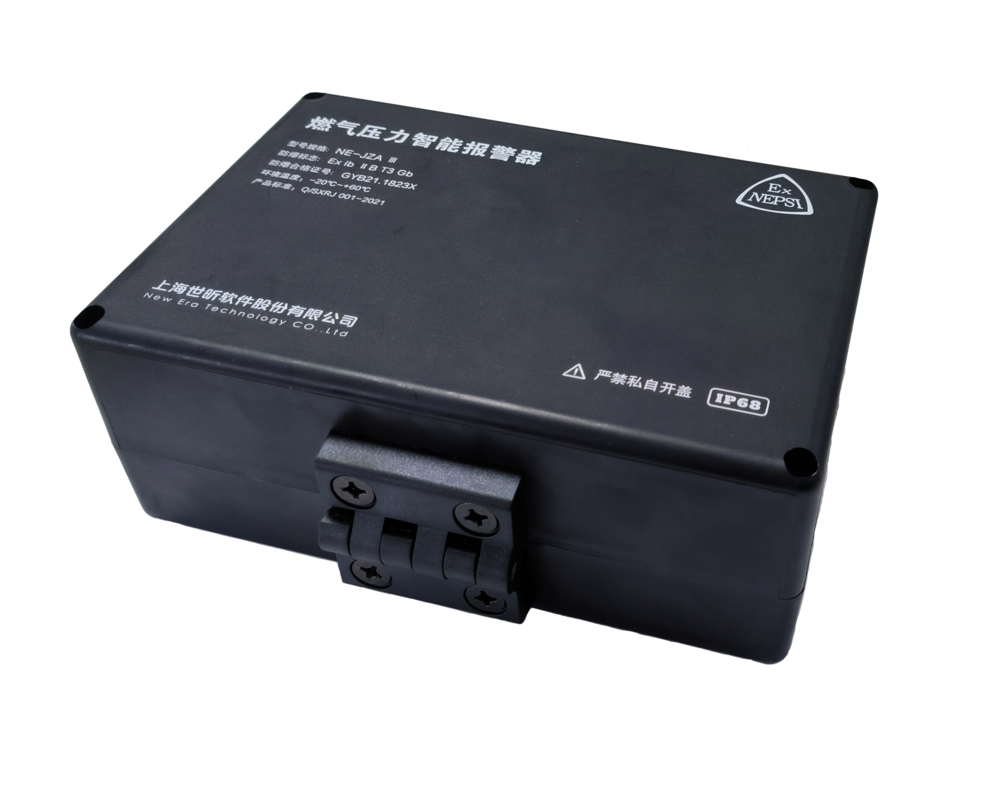
The Gas Pressure Regulator Early Warning System consists of an information acquisition unit (gas pressure regulator early warning device), a communication hub (telecom base station), information terminals (PC and mobile devices), and an alarm server. The information acquisition unit collects on-site data from gas pressure regulators and directly transmits the data via the early warning device to a designated host. Through a dedicated server and monitoring terminals (PC and mobile devices), the system enables real-time remote monitoring of gas pressure regulator operating conditions.
Equipped with different transmitters, the system can monitor data such as pressure, differential pressure, gas leak concentration, internal pipeline temperature, flow rate, shut-off valve operational status, and pressure regulator cabinet door open/close status.
Technical Specifications
Overall accuracy class for pressure signal sampling
Accuracy class ≤ 0.5% FS
Pressure signal sampling interval
1 second/sample to 9 minutes/sample
Supports connection of five pressure transmitters
Accuracy
Class 0.5
Stability
0.02% FS/year
Communication methods
GSM + NB-IoT + wireless mobile communication network (GPRS)
Two current analog signal interfaces
4–20 mA
Two external communication ports (RS485 and TTL)
For connecting external flow meters or computers
Battery service life
1 year (detection frequency: once per minute; data upload: once per day; maximum: 400 uploads/year)
Explosion-proof rating
Ex ib II B T3 Gb
Data storage capacity
Stores up to 300,000 monitoring values with corresponding timestamps
Read/write cycles (storage component lifespan)
≥1014 cycles
Technical Features
1. Customizable power supply solutions: offers mains power, battery, and solar power options based on customer requirements.
2. Unlike large-scale SCADA systems, it is easy to install, does not require mains power, is low-cost, and supports multiple communication methods: GPRS, NB-IoT, and 4G.
3. Automatically collects data and generates data charts, facilitating data storage while reducing paper consumption—eco-friendly and energy-efficient.
4. Enables proactive risk prevention through real-time alarms, extending the service life of pressure regulators and reducing gas usage risks.
5. High efficiency and low maintenance costs help reduce enterprise expenditures, delivering both economic and social benefits.
6. Ensures safe gas usage for end-users and enhances service quality and management standards in the gas industry.
7. Monitoring equipment records data on pressure, leakage, flow, differential pressure, temperature, and shut-off status, enabling comprehensive, full-lifecycle monitoring of pressure regulator equipment.